Tools for the Skin
From pigment and punctures to ultrasound echoes, each tool asks something different of the hand.
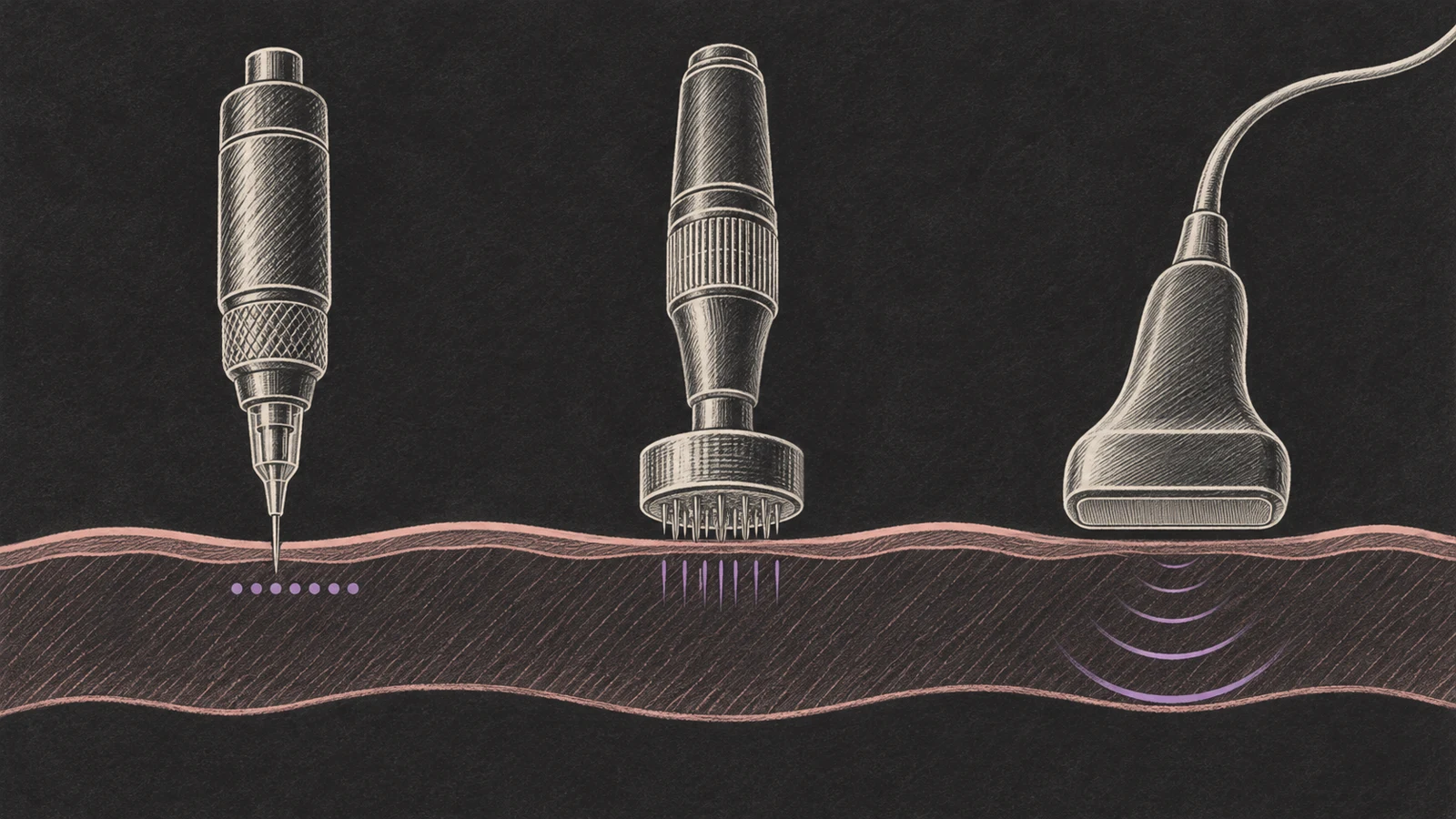
A tattoo pen puts pigment into skin. A microneedling pen makes a field of small punctures. An ultrasound probe glides across the surface and returns an image of what lies underneath. All three ask the hand to follow a changing surface, but each gives the operator a different job. The tattoo artist follows a design. The needling pen covers an area. The sonographer moves until the image shows the structure they came to find. FDA on tattoos and permanent makeup, FDA on microneedling, FDA on ultrasound imaging.
Skin is both a surface and a way into the body. A dermatoscope reads the surface. A biopsy punch takes a sample through it. A laser can target pigment, a hair follicle, or tissue itself. The handpiece might be a simple blade, a cordless probe, or the part of a larger machine that the operator holds. The repertoire stretches from cosmetic care and tattooing to diagnosis, surgery, and wound care. FDA on medical lasers, American Academy of Dermatology on skin biopsy.
What a needle can do
Mechanical microneedling has three common forms. A roller carries needles around a cylinder. A stamp presses an array into one footprint at a time. A motorized pen moves the needles in and out of a cartridge as the practitioner works across an area. For a tattoo the pattern comes from the image. For a microneedling pen the pattern comes from the area to cover, the tool footprint, and the distribution of punctures. Device travel and what happens in tissue are separate measurements. Tissue can deflect under contact, and an ex vivo skin study used microscopy to observe the channels left by the needles. FDA device overview, ex vivo microneedling study.
In the U.S., FDA lists specific authorized microneedling devices for improving the appearance of facial acne scars, facial wrinkles, and abdominal scars in adults 22 and older. The device and its labeling specify the use and body area. FDA also says it has not authorized microneedling medical devices to deliver cosmetics, drugs, or blood products such as platelet-rich plasma. Product names like “nano-needling” and “microinfusion” need to be unpacked by what touches the skin, what penetrates, and what, if anything, is delivered. FDA distinguishes superficial exfoliation products from devices intended to alter living tissue. FDA device overview, FDA microneedling guidance.
Radiofrequency microneedling adds heat below the surface through needle electrodes. The operator has to account for where the needles go and where the energy acts. In October 2025, FDA reported serious complications with certain uses, including burns, scarring, fat loss, disfigurement, and nerve damage. The communication describes reports and provides no incidence estimate. Dermal micro-coring changes the job again. Its hollow needles remove small pieces of tissue. The holes might look superficially similar, while the mechanism and intended effect differ. FDA RF microneedling safety communication, FDA micro-coring device summary.
What an ultrasound probe can do
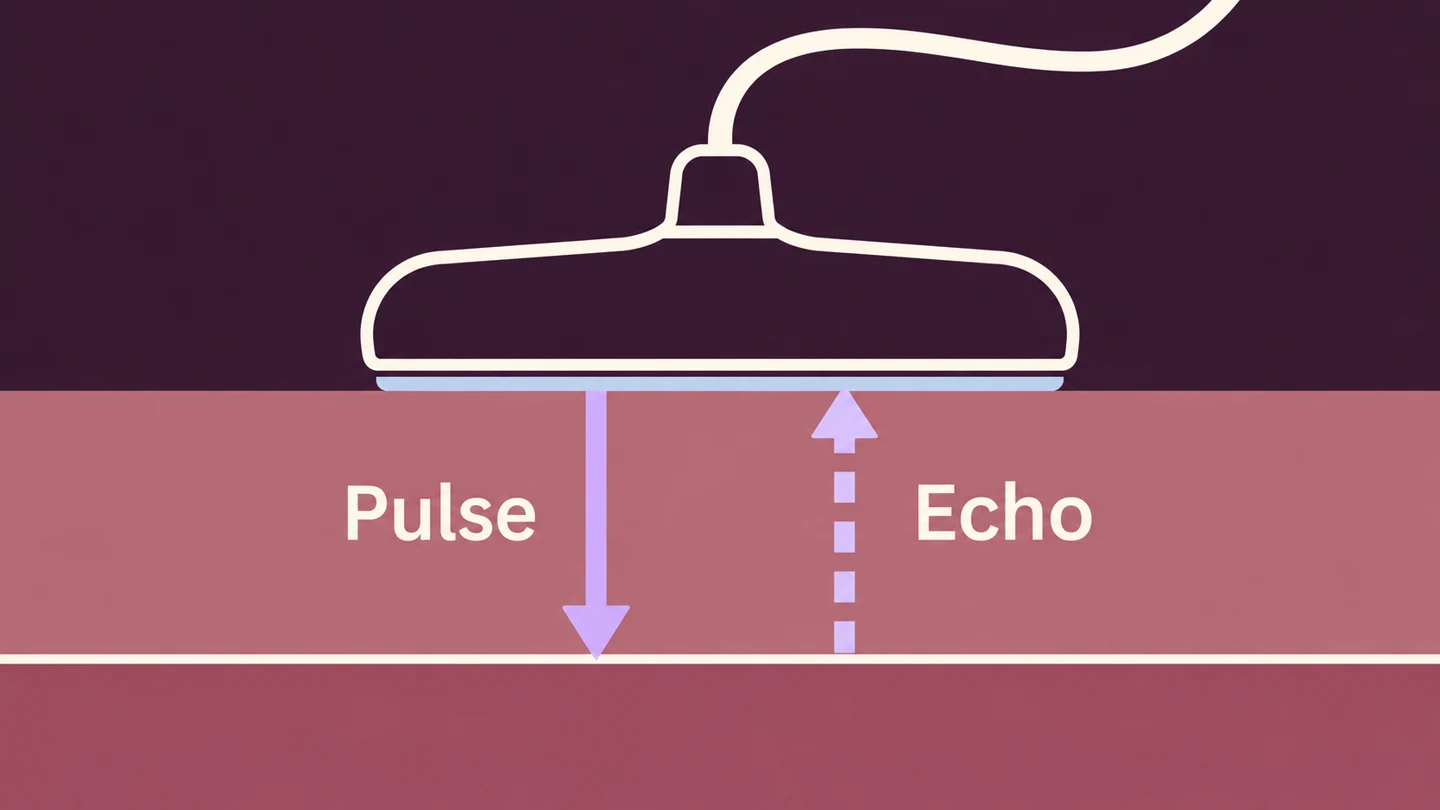
To see under the skin, a diagnostic transducer sends sound into tissue and receives echoes. Gel provides acoustic coupling. Higher frequencies generally trade penetration for finer detail, useful for looking at shallow layers and small structures. In one retrospective study of 34 patients with hidradenitis suppurativa, scans showed fluid collections and tunnels beneath the skin that added information to the clinical exam. Doppler adds information about movement such as blood flow. The same handheld approach reaches well beyond dermatology into vascular, musculoskeletal, and point-of-care imaging. FDA imaging overview, FDA example of a dermatology transducer, hidradenitis study, AIUM musculoskeletal practice parameter.
During an ultrasound-guided biopsy, aspiration, or injection, one instrument shows anatomy and the moving needle while the other performs the procedure. This makes each view useful only in relation to the target and the active instrument. Pose, compression, and image quality matter together. A study on three-dimensional ultrasound reconstruction measured the distortion caused by probe pressure. A surface scan can help place the probe, and the ultrasound image can show how the probe is changing the surface it presses against. AIUM practice parameter for selected ultrasound-guided procedures, probe-pressure deformation study.
For treatment, a focused ultrasound handpiece can direct energy below intact skin. Some systems combine imaging and treatment in the same handpiece. Ulthera is an example of microfocused ultrasound with visualization for lifting indications. Body-contouring ultrasound, therapeutic ultrasound in rehabilitation, and low-energy ultrasound for wound cleaning have different targets and equipment. Their similar grips tell us very little about the intended effect or the controls needed to achieve it. FDA Ulthera record, Ulthera system description, FDA body-contouring technologies, FDA ultrasonic diathermy guidance, FDA ultrasound wound-cleaner guidance.
Read, measure, or sample
- Dermoscopy and clinical photography. An illuminated magnifier or camera records surface patterns, including pigmented lesions. The output is a view or a record over time. AAD skin cancer diagnosis overview
- Wood's lamp examination. A small ultraviolet lamp helps reveal certain fluorescence and pigment patterns that can be hard to see under ordinary light. Cleveland Clinic on Wood's lamp exams
- Reflectance confocal microscopy, optical coherence tomography, and optical spectroscopy. Optical probes can show shallow structure at different scales or measure a light-scattering signal. They answer different questions. The FDA's DermaSensor decision, for instance, describes a spectroscopy aid for assessing already suspicious lesions in a specified clinical setting. Handheld confocal study, head-to-head optical imaging trial, FDA DermaSensor decision summary
- Skin barrier and hydration measurements. Probes measure properties such as surface hydration or transepidermal water loss. The output is a local reading associated with a site and time. Skin measurement repeatability study
- Diagnostic ultrasound, Doppler, and ultrasound guidance. A probe makes an image, detects flow, or supplies a live view during use of another instrument. FDA imaging overview, AIUM guided procedures
- Shave, punch, and excisional biopsy. A blade, circular punch, or scalpel removes a specimen. The selected tissue and whether it can answer the pathology question matter along with the cut. AAD biopsy overview, AAD procedure terminology
- Surface scraping and swabbing. A scraper or swab collects a specimen for a lab test. Skin scrapings examined under a microscope are one example of how a surface sample can inform a diagnosis. CDC provider-performed microscopy procedures, UW Medicine laboratory test guide
Place material, puncture, or release tissue
- Tattooing, permanent makeup, and medical tattooing. Hand tools or powered machines place pigment. Decorative tattooing, cosmetic pigmentation, and restorative pigmentation share a mechanism and have distinct goals. FDA on tattoos and permanent makeup
- Body piercing. A piercing needle creates an opening for jewelry at a selected anatomical site. The geometry of that single opening matters. New Jersey Department of Health on body art
- Mechanical microneedling and RF microneedling. A roller, stamp, or pen distributes punctures across a region. RF devices use needle electrodes to deliver energy into tissue. FDA device overview, FDA RF safety communication
- Fillers, intralesional medication, and botulinum toxin injections. A syringe with a needle or cannula places material at a chosen site. Target, dose or volume, and nearby anatomy govern the work. With fillers, unintended injection into a blood vessel can cause injury including tissue death, blindness, or stroke. FDA dermal fillers, AAD acne treatment, FDA botulinum toxin label
- Subcision and scar release. A needle or other instrument works below a depressed scar to release the tissue tethering it. The working motion is beneath the surface, and its location and extent matter. Clinical and histological comparison of subcision tools
- Dermal micro-coring. A powered handpiece with hollow needles removes many small cores. Pattern, tissue removal, and recovery all matter. FDA Ellacor device summary
- Hair transplantation by follicular unit extraction. A manual or powered punch frees individual donor follicular units for harvest. The landmarks and orientation are specific to each follicle. International Society of Hair Restoration Surgery tool history, FDA ARTAS record
Remove tissue, clean a wound, or resurface
- Dermaplaning, microdermabrasion, and surgical dermabrasion. A blade removes surface material and fine hair in dermaplaning. Microdermabrasion uses a superficial abrasive tip or particles. Powered surgical dermabrasion removes tissue with a rotating abrasive instrument. Cleveland Clinic on dermaplaning, AAD microdermabrasion, FDA dermabrasion guidance
- Hydradermabrasion and acne extraction. Hydradermabrasion combines superficial exfoliation with fluid application. Extraction targets individual comedones or other acne lesions. The first covers an area and the second works on selected spots. Hydradermabrasion study, AAD acne treatment
- Chemical peels. A handheld applicator spreads a chemical over a selected area. The delivered chemical and exposure determine the effect. AAD chemical peel overview, FDA chemical peel warning
- Excision, Mohs surgery, and curettage with electrodesiccation. A scalpel removes selected tissue. Mohs uses microscopic margin assessment to direct successive excisions. A curette scrapes tissue, and an electrode can treat the remaining bed in selected lesions. AAD Mohs surgery, AAD squamous cell carcinoma guideline
- Wound debridement and irrigation. Hand instruments such as scalpels and curettes remove unwanted tissue. Other tools apply a fluid jet or use low-energy ultrasound to clean a wound. Selectivity and assessment of the wound bed matter. CMS wound-care descriptions, FDA hydrosurgery device summary, FDA ultrasound wound-cleaner guidance
Deliver light, heat, cold, current, or pressure
- Laser tattoo removal, pigment and vascular treatments, and hair reduction. Optical handpieces deliver pulses to a target such as tattoo pigment, melanin, or blood vessels. Device choice and targeting vary with the tissue and intended effect. Intense pulsed light (IPL) is a separate light source used for certain pigment, vascular, and hair procedures. FDA tattoo removal, FDA medical lasers, FDA example of a laser and IPL system
- Ablative and nonablative laser resurfacing. An ablative laser removes tissue. A nonablative laser heats targeted tissue without vaporizing it. Fractional delivery describes a pattern of separated treatment spots and can be used in either category. FDA ablative laser example, FDA nonablative laser example
- Targeted phototherapy and photodynamic therapy. A light source treats a selected area. Targeted excimer phototherapy delivers ultraviolet light. Photodynamic therapy combines illumination with a photosensitizing agent and can also use stationary illuminators. FDA excimer device example, FDA photodynamic therapy system
- Surface RF, electrosurgery, and plasma devices. A contact RF applicator can heat tissue beneath the surface. Electrosurgical tips can cut, coagulate, or destroy selected tissue. Certain plasma handpieces also deliver energy to tissue, with use and risks specific to the device and tip. FDA body contouring, FDA plasma device safety communication
- Cryosurgery and cryolipolysis. A spray or contact tip freezes a selected lesion in cryosurgery. Cryolipolysis uses sustained cooling of tissue in a positioned applicator to target fat. It is commonly positioned by hand and held at one site during treatment. AAD wart treatment, FDA body contouring
- Electrolysis and facial electrical stimulation. A fine electrolysis probe targets one hair follicle at a time. Surface electrodes on facial stimulators apply current over intact skin. The work ranges from individual follicle targeting to surface contact over a region. Cleveland Clinic on electrolysis, FDA facial stimulator example
- Focused ultrasound, body-contouring ultrasound, and therapeutic ultrasound in rehabilitation. Acoustic handpieces deliver energy for distinct therapeutic aims. A focused system targets a region below the surface. Contact, coupling, and the location of the acoustic effect depend on the device. FDA focused ultrasound classification example, FDA body contouring, FDA ultrasonic diathermy guidance
- Mechanical massage, vacuum, vibration, and acoustic pressure waves. Rollers and other applicators press, lift, or vibrate skin and underlying tissue. Some devices combine vacuum with another modality such as RF. Load, duration, and movement define the mechanical interaction. FDA body contouring
What carries over to robotics
The useful comparison is what the operator observes and adjusts. A tattoo line follows a drawing. An area pass needs a record of where the tool actually contacted the surface. A spot treatment depends on the identity and position of each target. A scan is steered by what comes back from the probe. Across all four, contact can change the shape of the thing being worked on. A position trace alone cannot say whether the probe stayed coupled, whether adjacent footprints overlapped, or whether the same structure appeared in each frame. Probe-pressure deformation study, robotic ultrasound force-control study.
Robotic ultrasound and hair restoration illustrate different divisions of labor. A prospective thyroid study put a remote clinician in control of a robot-held probe. A separate force-control study reported tests on an abdominal phantom and two volunteers, a narrow demonstration of moving a probe and collecting images under contact. In hair restoration, ARTAS is a physician-operated, image-guided example that mechanizes a specific part of follicular unit harvesting. Telerobotic thyroid ultrasound study, force-control study, FDA ARTAS record, hair restoration instruments.
For Tatbot, microneedling offers a comparison for coverage, and diagnostic ultrasound offers a comparison for feedback. A curved practice surface can make the first question measurable with an inert contact tool. An ultrasound phantom with known features can make the second question measurable by showing whether a repeat sweep returns the same structures. One asks where the tool touched. The other asks what the tool could see while it was there.